

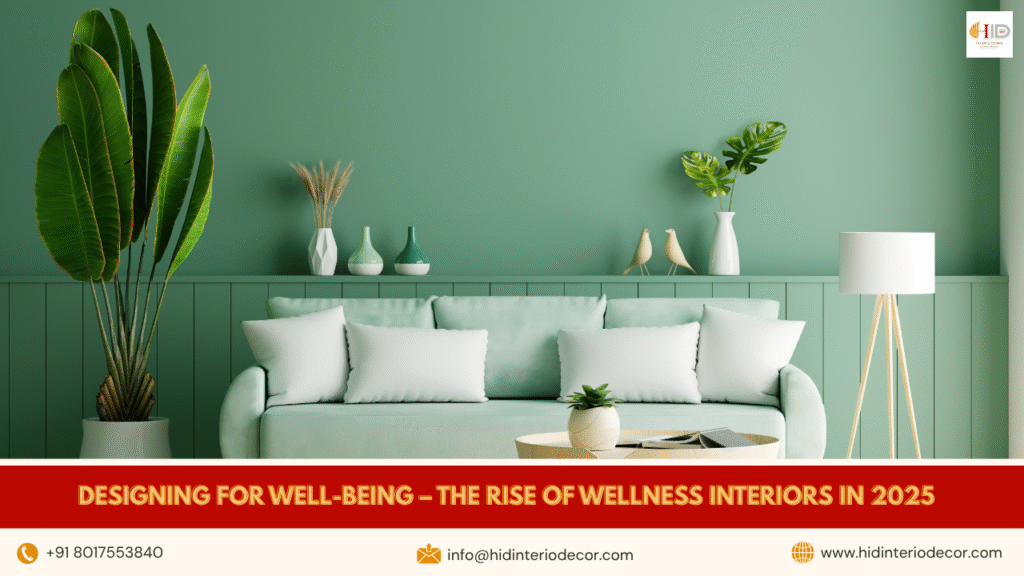
In today’s fast-paced world, the spaces we live and work in are more than just backdrops to our lives — they significantly impact our physical, mental, and emotional health. As we step into 2025, a powerful shift in interior design is taking center stage: wellness-driven spaces.
At HID Designing Dreams, we recognize that the future of design goes beyond aesthetics. It’s about creating environments that help people feel better, think clearer, and live healthier. This blog explores the growing importance of wellness interiors and how you can integrate them into your home, office, or commercial space.
- What Are Wellness Interiors?
Wellness interiors are spaces consciously designed to support holistic well-being. These interiors blend principles from biophilia, psychology, sustainability, and ergonomics to create healthier, happier environments.
The goal is to reduce stress, improve sleep and productivity, and increase comfort through thoughtful design — not just in homes, but also in corporate offices, multiplexes, and commercial projects.
- The Key Elements of a Wellness-Centric Space
Let’s dive into the essential features that define wellness interiors in 2025:
✅ Natural Light Optimization
Access to daylight has proven benefits — it boosts mood, enhances focus, and even supports healthy sleep cycles. Designers now focus on maximizing window placement, using skylights, and choosing translucent blinds or light-filtering curtains.
✅Biophilic Design
Bringing nature indoors is more than a trend — it’s a necessity. Indoor plants, green walls, natural materials (like stone and wood), and water features reduce anxiety and enhance air quality, making spaces feel grounded and alive.
✅ Ergonomic Furniture
From sit-stand desks to lumbar-supporting chairs and posture-friendly sofas, ergonomic design is central in 2025. It’s not just for offices anymore — even residential spaces now include well-planned reading corners, study nooks, and meditation zones.
✅ Healthy Materials
Wellness-focused interiors avoid harmful chemicals and synthetic finishes. Non-toxic paints, VOC-free adhesives, organic fabrics, and sustainable flooring like cork or bamboo are preferred to support cleaner indoor air.
✅ Mood-Enhancing Colors
Colors have a deep psychological effect. Soft pastels, earthy tones, and calming hues like sage green or warm beige are trending in wellness design. Accent walls in sunset tones or ocean blues create subtle emotional balance.
✅ Sound Management
Acoustic design has become a priority. Noise-absorbing panels, soft textiles, and layout adjustments reduce harsh sounds and echoes, helping create quieter, more peaceful interiors — whether in a home theatre or a corporate lounge.
- Wellness in Corporate and Multiplex Interiors
Workplaces in 2025 are shifting towards employee-first design. Wellness interiors in offices include:
- Natural light zones for breaks
- Focus rooms with sound insulation
- Indoor gardens or balcony greenspaces
- Calming reception and lounge designs
Similarly, multiplexes and entertainment zones are adopting wellness cues — from comfortable seating and natural materials in waiting areas to relaxing restroom aesthetics and healthy air circulation systems.
- Wellness and Technology: A Balanced Approach
Designers are now striking a balance between digital living and analog peace. Smart tech is integrated subtly to reduce stress — think voice-controlled lights, climate sensors, air purification systems, and lighting that syncs with circadian rhythms.
But equally important are tech-free zones — like screen-free bedrooms, analog reading corners, or meditation alcoves — where the mind can truly unwind.
- Why Wellness Interiors Are the Future
- Increased awareness about mental health and burnout
- Growing demand for home-based workspaces and self-care zones
- Sustainability consciousness paired with personal well-being
- A desire for balance in an increasingly connected world
Wellness interiors are no longer an option — they’re a necessity in modern living.
Final Thoughts
As we move forward into a more wellness-aware era, interior design will continue evolving to serve people better — physically, mentally, and emotionally.
At HID Designing Dreams, we specialize in designing interiors that don’t just look good but genuinely feel good. Whether you’re designing a peaceful home, a wellness-oriented office, or a visitor-friendly multiplex, our team is here to bring balance, beauty, and well-being into your space.
Bottom of Form