

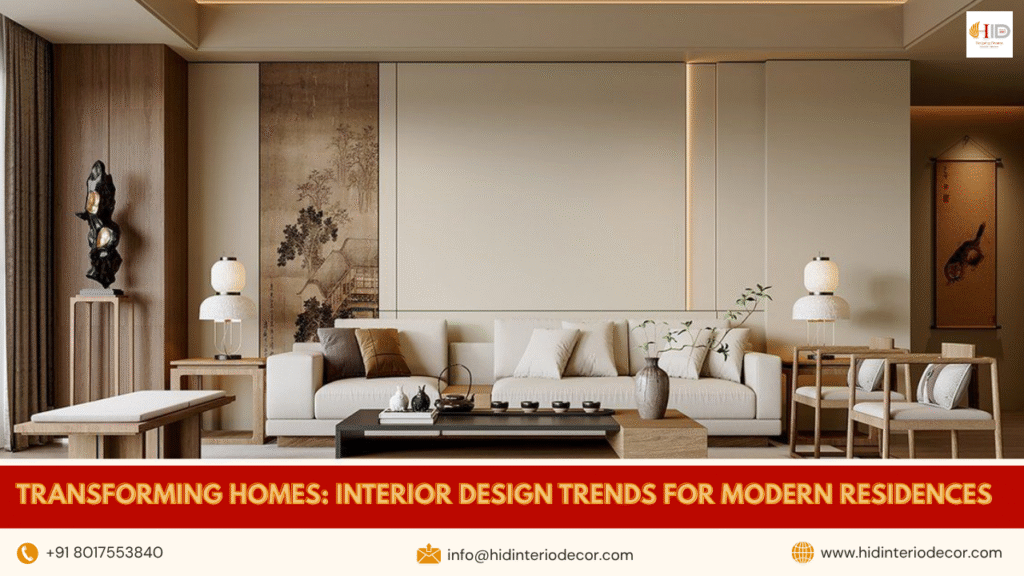
Transforming Homes: Interior Design Trends for Modern Residences
Interior design isn’t just about beautifying a space — it’s about creating an environment that aligns with lifestyle, functionality, and comfort. As modern families evolve in their preferences and needs, residential interiors are also undergoing a remarkable transformation. Let’s explore some of the most popular interior design trends shaping today’s modern homes.
- Minimalist Living with a Touch of Warmth
The minimalist movement continues to thrive, but with a softer edge. Clean lines, neutral tones, and clutter-free layouts are now paired with warm textures, cozy fabrics, and earthy hues. Think soft beige walls with wooden accents, open shelves with curated décor, and natural lighting that enhances the serenity of the space. This blend offers visual clarity while still feeling inviting.
- Multifunctional Spaces
With changing work routines and evolving family needs, multifunctional spaces are no longer a luxury — they’re a necessity. A single room may now serve as a home office, reading nook, or even a mini-gym. Interior designers today are incorporating foldable furniture, hidden storage, and transformable layouts that make it easier to switch between functions without compromising aesthetics.
- Biophilic Design: Bringing Nature Indoors
There is a growing desire to reconnect with nature — even within the home. Biophilic design focuses on incorporating elements of the natural world into interiors. This includes indoor plants, living walls, stone textures, wood grains, and natural daylight. These elements not only enhance the visual appeal but also contribute to well-being by reducing stress and improving air quality.
- Vastu-Inspired Layouts
Vastu-inspired designs are seeing a strong comeback, especially in family homes. Interior designers are paying more attention to the directional placement of rooms, furniture, and colors to enhance energy flow. While maintaining a modern aesthetic, designers subtly integrate vastu principles without overwhelming the design language, creating homes that feel harmonious and balanced.
- Statement Ceilings and Walls
Gone are the days when all attention was focused on flooring and furniture. Today’s homes are seeing a creative use of ceilings and walls. From textured ceiling panels and wooden rafters to bold wall paints and custom murals, these elements add personality and depth to interiors. Accent walls using wallpaper or 3D cladding also act as focal points in bedrooms and living rooms.
- Tech-Savvy Interiors
Smart homes are becoming more accessible. Designers are now integrating technology into the design process — from automated lighting and climate control to remote-controlled curtains and security systems. These additions are embedded in such a way that they complement the design rather than disrupt it, resulting in seamless functionality.
- Modular Kitchens with Personal Touches
Kitchens are turning into social zones and personal sanctuaries. Modular kitchen designs are customized based on the owner’s lifestyle, whether it’s for hosting parties or cooking elaborate meals. Features like soft-close drawers, corner carousels, and pull-out pantry units improve functionality, while color themes and materials reflect the homeowner’s personality.
- Texture Play in Decor
Mixing materials and textures is one of the most effective ways to add richness to a space. Soft velvet cushions on a leather couch, matte-finish walls with metallic fixtures, or a jute rug on polished floors — the contrast of textures creates a visual dialogue. Interior designers are now deliberately playing with layers to create depth and interest.
- Customized Furniture Pieces
Custom-made furniture is becoming more popular as homeowners seek individuality. Designers work closely with clients to create signature pieces that not only fit the space but also tell a story. From beds with storage to coffee tables with hidden compartments, bespoke furniture adds both beauty and utility.
- Mood Lighting for Every Occasion
Lighting can change the entire ambiance of a home. Layered lighting — which combines ambient, task, and accent lighting — is used to give flexibility and control. Warm yellow lights in the living room, focused task lights in the kitchen, and dimmable ceiling lights in bedrooms allow each room to transform based on activity and mood.
Final Thoughts
Interior design is more than decoration; it’s a thoughtful arrangement of space, elements, and emotion. Whether you’re looking to remodel your entire home or just upgrade a single room, aligning with current trends can add both aesthetic appeal and lifestyle value.
At HID Designing Dreams, we believe in creating timeless yet trend-forward spaces that reflect who you are. Let us help transform your house into a home.